5 Unpaid Challans = Your Licence Suspended in 2026
Two separate changes in 2026 have made ignoring traffic challans far riskier. First, committing five or more traffic offences in a single year can now cost you your driving licence. Second, leaving a challan unpaid past its 45-day window can lock you out of most RTO services. Both come from a real, notified amendment — not a rumour. Here is what the rule says, what counts, and how to stay clear of it.
What the new rule actually says
On 21 January 2026, the Ministry of Road Transport and Highways (MoRTH) notified the Central Motor Vehicles (Third Amendment) Rules, 2026, amending the Central Motor Vehicles Rules, 1989.
The change adds a new ground to Rule 21, which sets out the licensing authority’s power to disqualify a driving licence under Section 19 of the Motor Vehicles Act, 1988. The inserted clause covers the commission of five or more offences or contraventions of the Act or these rules within a one-year period — making the licence holder liable to disqualification.
Two details matter:
- The count starts from 1 January 2026. Challans from 2025 or earlier are not counted.
- Each one-year period is judged on its own. Offences recorded in a previous year do not carry into the next.
So this is about offences committed and recorded against your licence — not only fines left unpaid.
“5 offences” vs “5 unpaid challans” — the real difference
This is where most coverage gets muddled, so read it slowly.
- Rule 21 (national): five or more traffic offences in a year makes your licence liable to disqualification by the licensing authority.
- Enforcement drives (state/UT level): some authorities, such as the Chandigarh Administration, are issuing notices to owners with five or more unpaid challans, giving 15 days to clear dues — failing which the licence is cancelled and the RC suspended.
The first is about how often you break the rules. The second is about leaving fines unpaid. Either one can put your licence and vehicle at risk.
What happens when you ignore a challan
MoRTH also rewrote Rule 167, the challan procedure. The timeline now works like this:
- You get 45 days to either pay the challan or contest it online with supporting proof.
- If you do nothing in those 45 days, the challan is treated as accepted — you lose the right to dispute it.
- Continued non-payment can get your vehicle flagged “Not to be Transacted” on the VAHAN portal.
That flag is the part that bites. Once set, it can block:
- RC renewal and ownership transfer
- Duplicate RC
- PUC (pollution) certificate
- Fitness certificate
- Driving licence services
An unpaid fine can freeze nearly every RTO transaction tied to you or your vehicle until it is cleared. It is far easier to check and pay a pending eChallan on the official Parivahan Sewa portal before things reach this stage.
Why the government tightened the rules
The trigger was poor recovery. Across many states, a large share of issued challans went unpaid, with some cities recovering only a fraction of the fines. Tying licence and RC services to challan clearance gives enforcement teams a practical lever and shifts the cost of ignoring fines back onto the driver.
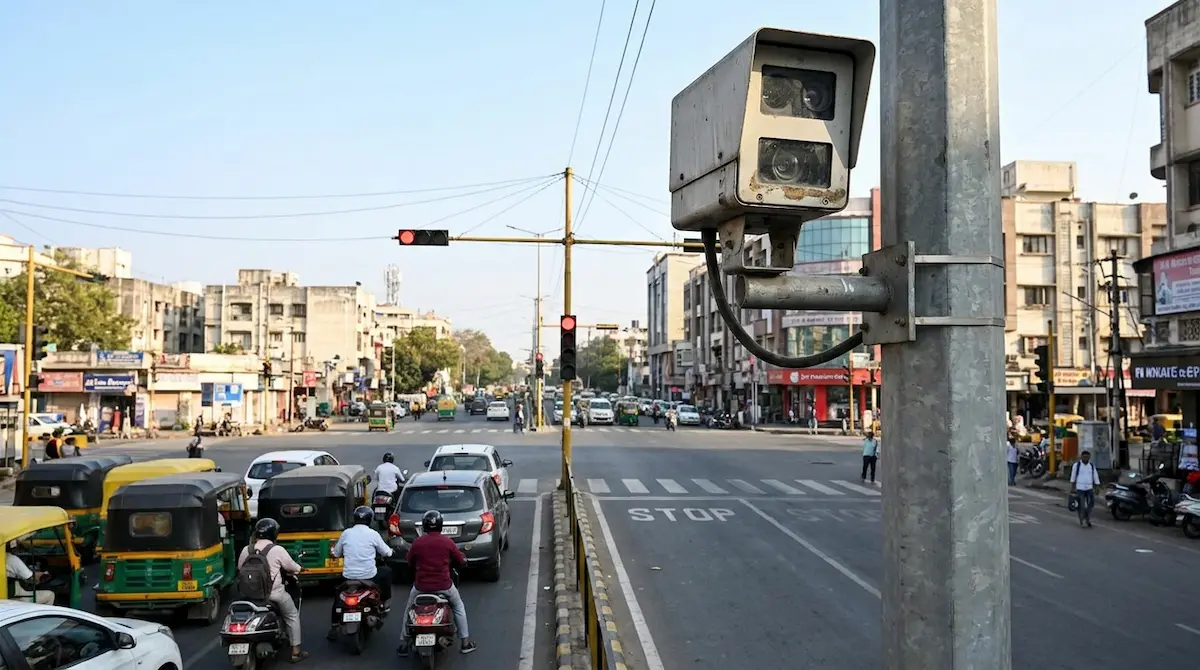
This sits alongside India’s wider move to camera-based enforcement. Automatic Number Plate Recognition (ANPR) cameras and Intelligent Traffic Management Systems now generate e-challans automatically, linked to your RC and licence record. There is far less room to “deal with it later.”
How to protect your licence
A few habits keep you on the safe side:
- Check for pending challans regularly using your vehicle number or DL number on the eChallan portal.
- Act within 45 days — pay, or contest with dashcam footage or photos if the challan is genuinely wrong.
- Keep your mobile number updated in your RC and licence records so e-challan SMS alerts actually reach you.
- Don’t let offences pile up. Even minor ones like no-helmet or signal jumping count toward the five-offence limit.
FAQs
Will my licence be cancelled automatically after five challans?
The rule makes a licence liable to disqualification by the licensing authority for five or more offences committed in a one-year period. It applies to offences recorded from 1 January 2026 onward and is acted on under the authority’s powers, not as a silent automatic cut-off.
Do my old 2025 challans count toward the five?
No. Only offences recorded on or after 1 January 2026 count, and each one-year period is assessed separately.
How long do I have to pay or dispute a challan?
You have 45 days from issuance to pay or contest it online. After that, it is treated as accepted.